Resizing & Retipping Moissanite Rings
How silicon carbide's rapid thermal conduction, flux fire-coat hazards, rhodium re-plating, and laser welding govern safe ring alterations.

How silicon carbide's rapid thermal conduction, flux fire-coat hazards, rhodium re-plating, and laser welding govern safe ring alterations.
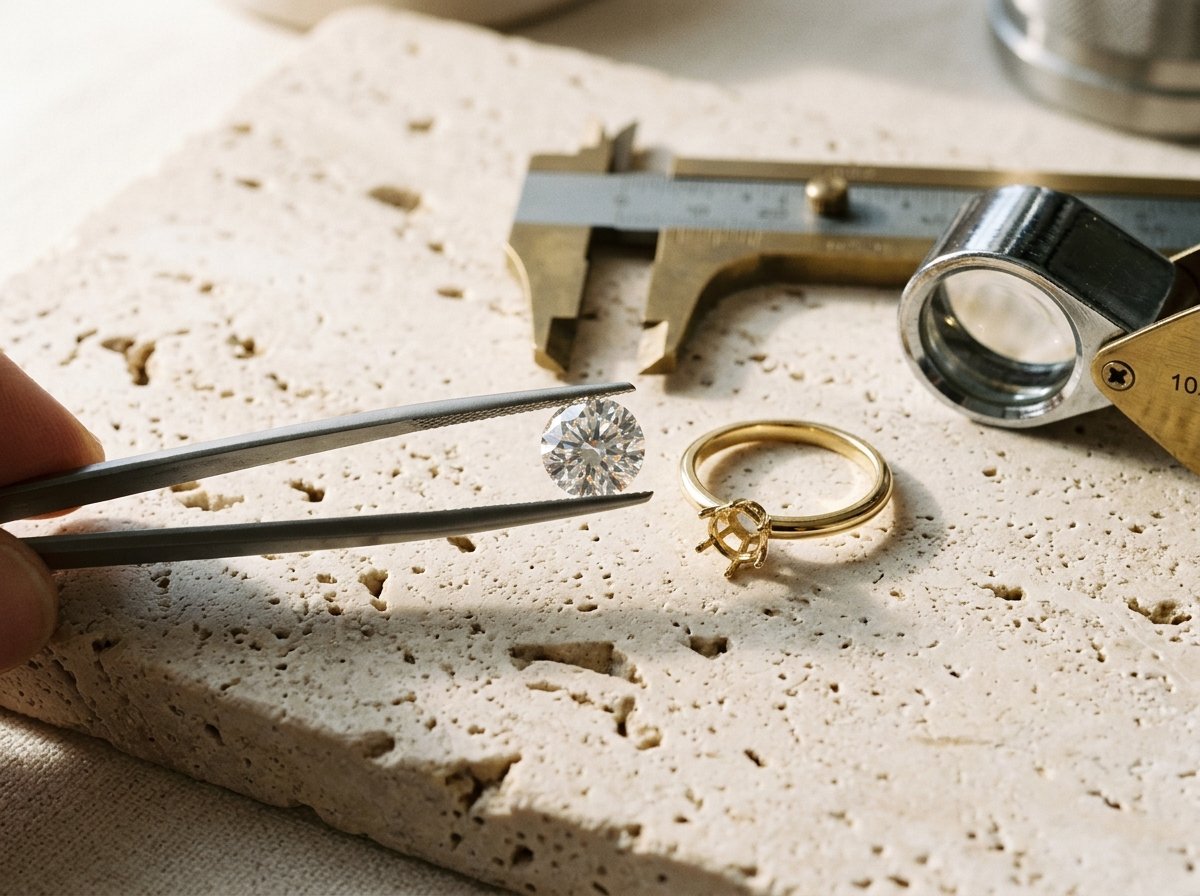
Changing finger sizes and worn claw tips inevitably bring well-loved rings back to the goldsmith's bench. Although jewelers understand diamond and sapphire heat behavior instinctively, 4H silicon carbide obeys slightly different thermal chemistry under an open torch.
Understanding why skilled benches rely on boric acid alcohol barriers, water-bath heat sinks, or Nd:YAG laser welders protects crisp Color D facets from avoidable surface haze during sizing or retipping.
At room temperature, 4H silicon carbide conducts heat three to five times faster than gold. An open torch aimed at a prong draws warmth straight into the stone, tempting unprepared operators to turn flame pressure higher.
Crucially, traditional borax paste fluxes turn caustic at red heat (750–950 °C). When hot flux contacts unshielded SiC under oxygen, a shallow silicate glaze—known as thermal frosting—can etch onto crown facets, demanding specialist diamond-lap repolishing.
Years of everyday contact gradually flatten gold claw tips. Historically, rebuilding thin prongs meant pulling the center stone out completely so hard torch solder could flow around 800 °C.
Modern workshops use Nd:YAG pulse laser welders. Pinpoint millisecond pulses fuse matching 14K gold or 950 platinum filler wire onto worn claws within tenths of a millimeter of the girdle while leaving the moissanite cool.
Plain 14K/18K gold and 950 platinum solitaire shanks resize cleanly by one to two sizes. On micro-pavé bands, stay within ±0.5–1.0 size so shoulder bead seats do not warp.
Rhodium-plated 925 silver conducts flame heat across the whole band (~429 W/m·K) in seconds and needs full surface stripping plus fresh rhodium electroplating after sizing—making stone removal or submerged laser work the goldsmith norm.
Evaluating thermal exposure, stone removal needs, and plating steps across jewelry bench procedures.
| Repair Technique | Max Stone Exposure Temp | Risk of Surface Frosting | Best Ideal Application |
|---|---|---|---|
| Unmounted Torch Soldering | Zero (Stone Safely Removed) | Zero (100% Isolated) | Heavy Retipping, Full Rebuild, Silver Sizing |
| Nd:YAG Laser Welding | Localized < 80 °C | Zero (Pinpoint Pulse) | Retipping Prongs, Micro-Bezel Patches, Pt950 |
| Water-Submerged Shank Torch | < 100 °C at Crown | Negligible if Clean | Simple ±1 Size Gold Shank Resizing |
| Shielded Boric-Acid Torch | ~650–800 °C Shielded | Low (Requires Skilled Control) | Traditional Gold Repairs Without Laser |
| Unshielded Torch + Borax Paste | 750–950 °C Direct | High (Risk of Milky Haze) | Avoid Completely on Mounted Stones |
Because jewelers routinely unseat sensitive colored gems and filled diamonds before soldering, myths claim moissanite cracks under flame.
4H-SiC survives temperatures far past diamond oxidation; surface clouding occurs only when careless operators melt raw borax onto unshielded facets.
Low-cost plated brass or mystery-alloy rings cannot be resized or laser-retipped—the cheap base metal boils and collapses under heat. Solid hallmarked 925 sterling silver, 14K gold, or 950 platinum guarantees lifelong repairability.
Watch out for sub-$50 / sub-200 PLN silver rings: The same caution applies to discount online boutiques and resellers offering sterling silver moissanite rings for less than $50 (or under 200 PLN in European markets)—almost invariably inexpensive Asian mass-market builds set with weaker warm-tinted or imprecise stones.
Explore genuine hallmarked 925 sterling silver and solid fine-gold moissanite mountings crafted to exacting bench-repair standards.