Low-Profile Bezel vs. Cathedral Settings
Balancing snag-free clinical and athletic comfort against flush wedding-band stacking and architectural pavilion clearance.
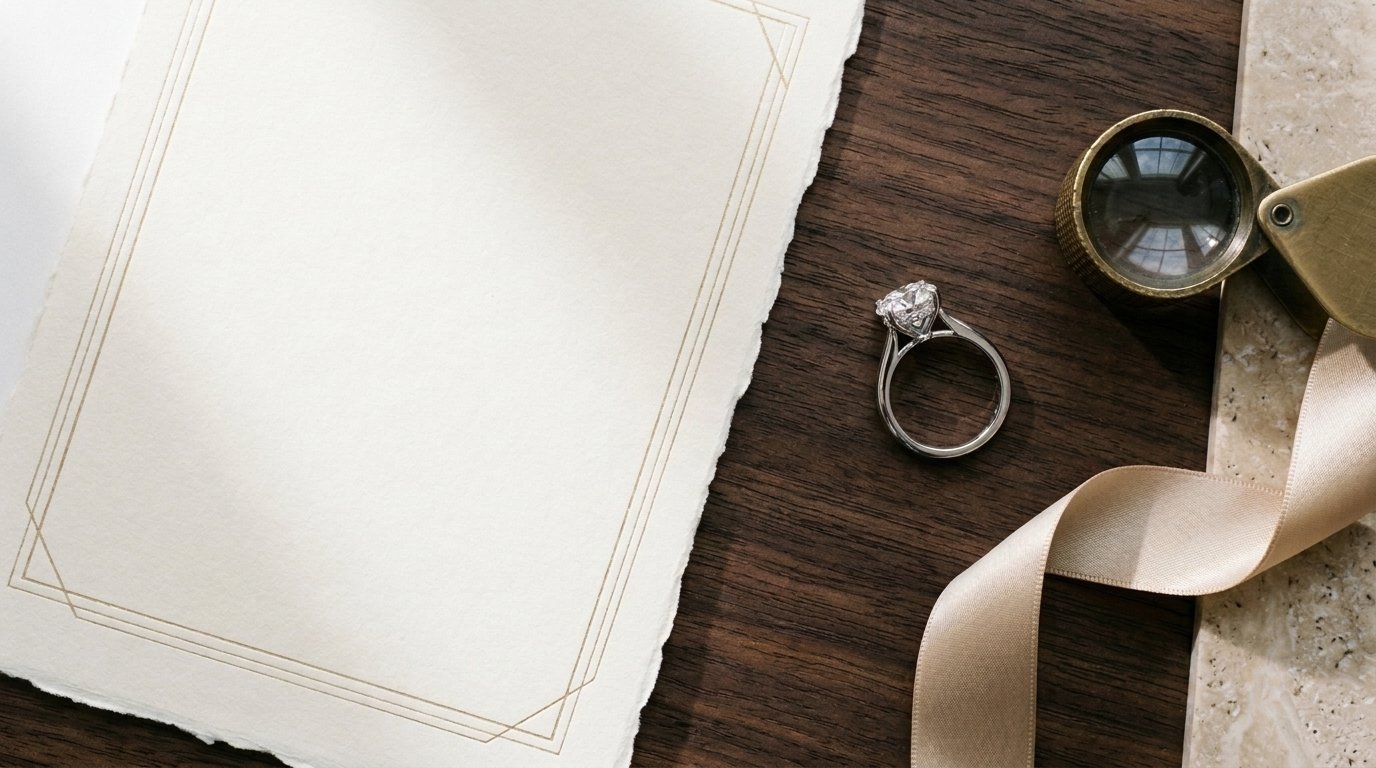
Balancing snag-free clinical and athletic comfort against flush wedding-band stacking and architectural pavilion clearance.
Crown height often goes overlooked in top-down ring photos, yet profile elevation governs how an engagement ring feels every waking hour. From nurses slipping on nitrile gloves to commuters digging into coat pockets, profile geometry separates effortless comfort from constant snagging.
Two structural approaches dominate fine moissanite design: the protective low-profile bezel and the elevated cathedral gallery. Comparing their clearance, stacking fit, and light physics helps match ring architecture to daily life.
A low-profile bezel lowers the pavilion near the finger and encloses the girdle inside a sleek continuous collar. With zero protruding claws, bezel rings glide smoothly inside surgical gloves, pockets, and knitwear—making them favorites among doctors, veterinarians, and parents.
A cathedral setting frames the center basket between sweeping arched shoulders roughly 6.5–7.8 mm tall. Those sloped struts reinforce lateral strength far better than freestanding peg heads while preserving dramatic side-profile gallery views.
Setting elevation determines how cleanly a wedding band sits beside your solitaire. Ultra-low heads sit wide right along the skin line, physically blocking straight companion rings and leaving a wedge gap—or causing adjacent 9.25 Mohs stones to abrade lower basket metal.
A properly engineered cathedral bridge raises the stone seat 2.0–2.4 mm above the finger circumference, allowing straight eternity or wedding bands to tuck neatly flush against the shank.
Contrary to showroom myths, bezels do not "starve" moissanite of light. Virtually all brilliance enters downward through the broad upper crown and table, reflects off steeply cut pavilion facets via total internal reflection, and exits back upward.
With silicon carbide's 2.65–2.69 refractive index (critical angle ~22°), light bounces cleanly inside a rubover bezel—provided the underside carries an open clean-out port so lotion and soap rinse cleanly off the back facets.
Real-world wearability, stacking behavior, and cleaning considerations across ring heights.
| Ergonomic Factor | Low-Profile Full Bezel | Cathedral Prong Bridge | Ultra-Low Peg Basket |
|---|---|---|---|
| Typical Crown Height | 4.2 – 5.2 mm | 6.5 – 7.8 mm | 5.0 – 5.8 mm |
| Glove & Knitwear Snag Risk | Virtually Zero | Low–Moderate (Smooth Claws) | Low–Moderate |
| Straight Band Flush Fit | No (Needs Contour or Gap) | Yes (Built-In Under Clearance) | Usually Leaves Small Gap |
| Side Impact Resilience | Maximum (Full Metal Collar) | High (Braced Upper Shoulders) | Moderate (Single Weld Point) |
| Center Stone Optical Fire | Full Crown Brilliance + Crisp Rim | Full Crown + Side Pavilion View | Full Crown + Open Gallery |
| Underside Cleaning Ease | Needs Open Culet Rinse Port | Wide Brush Access Under Head | Moderate Tight Finger Clearance |
Buyers mistake murky closed-back costume cups packed with trapped soap grime for optical girdle blockage.
As long as an open underside aperture lets soap rinse off the pavilion, an open-bottom bezel showcases crisp Color D scintillation.
Avoid solid-back costume bezels that glue stones into sealed cups with no rear cleaning port. Water and lotion seep underneath, trap permanent dark film against the pavilion, and turn any stone lifeless within weeks.
Watch out for sub-$50 / sub-200 PLN silver rings: The same caution applies to discount online boutiques and resellers offering sterling silver moissanite rings for less than $50 (or under 200 PLN in European markets)—almost invariably inexpensive Asian mass-market builds set with weaker warm-tinted or imprecise stones.
Explore engineered engagement solitaires and ergonomic everyday mountings finished with certified Color D silicon carbide.