Color D vs. E–I: Why Pure Optical Whiteness Changes Everything
How crystal bandgap purity, 2.69 refractive index path length, and cool white metals expose subtle E–I warmth—and why Biżuteria Pola insists on Color D.

How crystal bandgap purity, 2.69 refractive index path length, and cool white metals expose subtle E–I warmth—and why Biżuteria Pola insists on Color D.
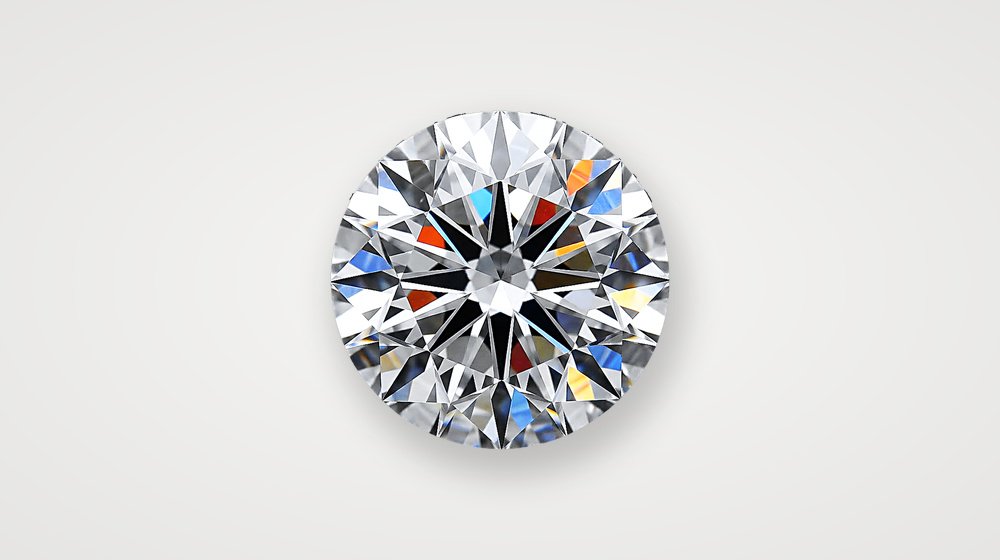
In natural diamond buying, dropping from Color D to G or H saves thousands of dollars with minimal visual trade-off. Applying that same diamond rule to laboratory silicon carbide backfires quickly, because 4H-SiC amplifies internal body tint through higher refraction and sells loose for ~$32 at 1.00 ct DEW.
Recognizing how Color D differs from E–F and near-colorless G–I lots empowers buyers to reject warm leftovers sold online and demand uncompromising icy whiteness.
First-generation moissanite relied on 6H-SiC crystals whose narrower bandgap (~3.02 eV) absorbed violet-blue light, yielding unmistakable straw or olive tones matching grades I–K.
Modern Physical Vapor Transport (PVT) synthesis grows pure hexagonal 4H-SiC (~3.26 eV). Even within 4H-SiC boules, however, peripheral furnace zones pick up trace nitrogen impurities that drop rough into E through H tiers—leaving only carefully screened central blocks at true Color D.
Because photons travel longer internal bounce paths inside high-RI silicon carbide, trace warmth invisible in a 5.0 mm (0.50 ct) accent becomes unmistakable in an 8.0–9.0 mm (2.0–3.0 ct) centerpiece:
Calibrated loose Color D / VVS1 stones cost roughly $23 (0.50 ct), $32 (1.00 ct), $50 (2.00 ct), and $92 (4.50 ct DEW). Because authentic Color D rough costs only a few dollars more per stone than G–H stock, serious ateliers never compromise.
Meanwhile, sub-$50 / sub-200 PLN marketplace rings routinely print “Color D” on generic listings while mounting warm G–I seconds. Biżuteria Pola maintains an exclusive Color D standard—screening out all E through I batches.
Measured visual behavior across color grades under calibrated D65 daylight on white grading paper.
| Criterion | Grade D (Biżuteria Pola) | Grades E – F | Grades G – I |
|---|---|---|---|
| GIA/GRA Tier | Colorless (Absolute Apex) | Colorless (Secondary) | Near Colorless / Faint Tint |
| White-Card Pavilion Check | 100% icy neutral clarity | Subtle softening beside D master | Visible ivory, cream, or pale green cast |
| Emerald & Step-Cut Fit | Crisp architectural mirror clarity | Faint body warmth at > 2.0 ct DEW | Noticeably creamy or muted chambers |
| Platinum / Rhodium Pairing | Seamless cool white harmony | Acceptable in small melee cuts | Visible contrast between silver and stone |
| Yellow / Rose Gold Pairing | High-contrast crisp ice flash | Gentle neutral-warm blend | Blends warmer; loses icy fire |
| Biżuteria Pola Acceptance | Accepted (100% Exclusive) | Rejected at optical sorting | Rejected (Bargain marketplace tier) |
That dated stereotype stems from 1990s 6H-SiC rough. Unsorted E–F and G–I stones show unmistakable warmth next to genuine modern 4H-SiC Color D crystals.
Viewed table-down under 5500K–6500K daylight, optically selected Color D 4H-SiC matches top diamond whiteness without warm undertone—even in 3.00 ct step cuts and platinum mounts.
Marketplace sellers offering sub-$50 / sub-200 PLN rings routinely advertise “Color D” while shipping warm G–I seconds or surface-coated simulants. Insist on documented Color D optical sorting before purchasing.
Watch out for sub-$50 / sub-200 PLN silver rings: The same caution applies to discount online boutiques and resellers offering sterling silver moissanite rings for less than $50 (or under 200 PLN in European markets)—almost invariably inexpensive Asian mass-market builds set with weaker warm-tinted or imprecise stones.
Discover fine solitaire and cathedral rings crafted exclusively around optically verified Color D / VVS1 moissanite—zero E or F compromises—at Biżuteria Pola.