Micro-Laser Girdle Verification: Decoding Your GRA Number
A bench guide to locating 10x girdle serials, matching millimeter calipers, and separating authentic 4H-SiC reports from cloned marketplace cards.
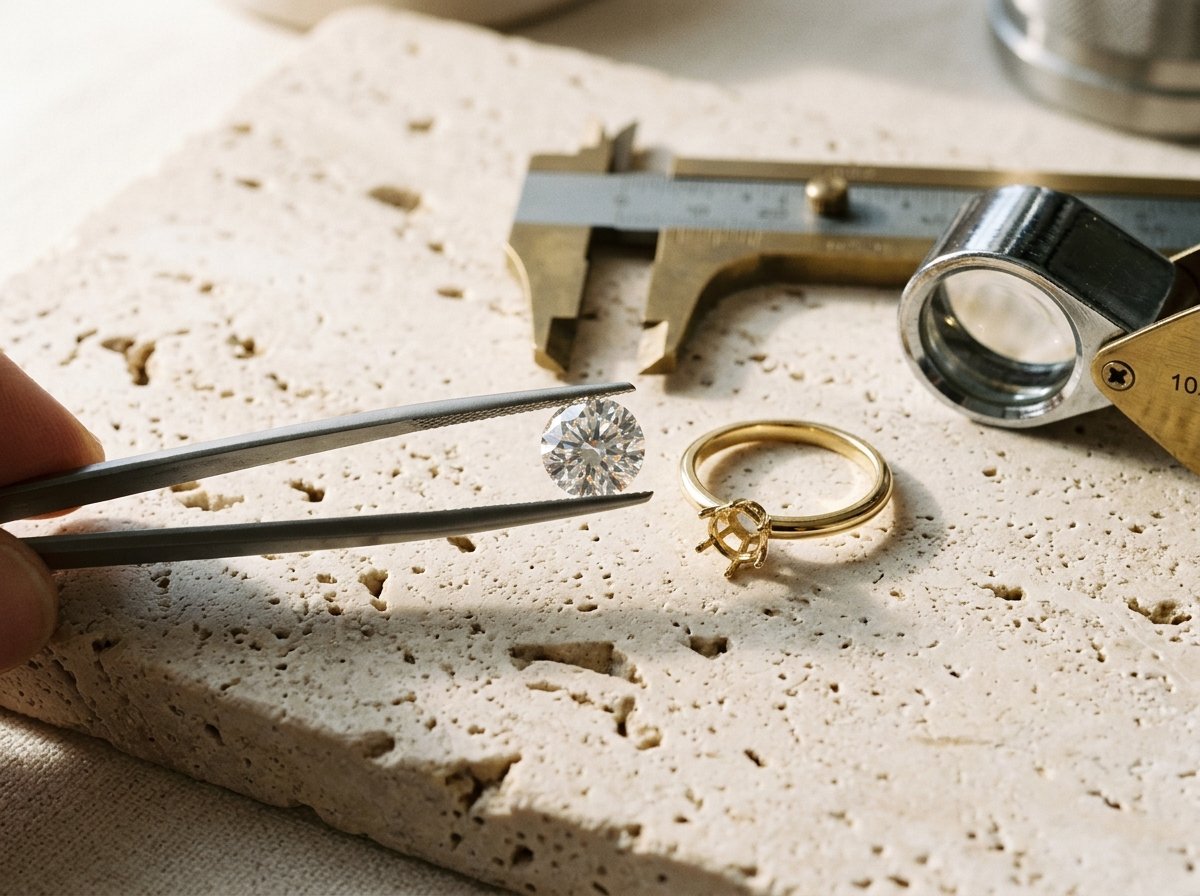
A bench guide to locating 10x girdle serials, matching millimeter calipers, and separating authentic 4H-SiC reports from cloned marketplace cards.
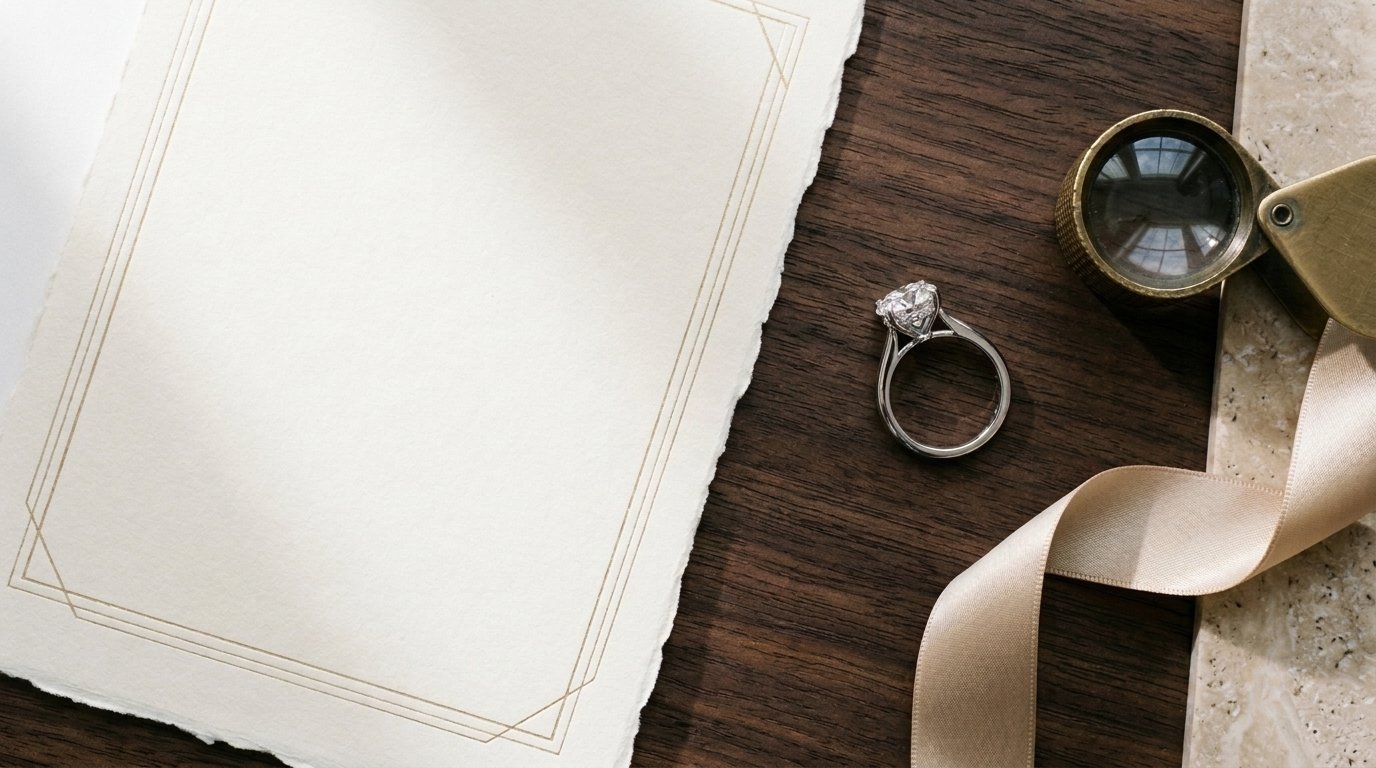
Every buyer shopping for laboratory-grown silicon carbide encounters the glossy dossier issued under the GRA (Global Gemological Research Association) banner. Yet a printed card inside a ring box proves nothing alone unless the gemstone physically matches the measurements, Color D optical grade, and micro-laser serial etched along its rim.
Learning how cold-laser inscriptions work—and auditing them with basic bench checks—protects international buyers from cloned serial sleeves and undisclosed simulants covered under Federal Trade Commission (FTC) Jewelry Guides (16 CFR Part 23).
Before a calibrated Color D / VVS1 crystal leaves inspection, an ultraviolet cold-laser beam ablates a shallow serial—such as GRA-198472610—along the girdle rim. Because 9.25 Mohs silicon carbide conducts heat rapidly, cold ablation forms crisp legible digits without inducing micro-fractures.
Placed strictly along the equatorial girdle, the inscription stays invisible face-up through the table and never interferes with brilliance (2.65–2.69 RI) or dispersion (0.104 fire).
Overhead room glare easily washes out fine laser grooves against bright pavilion reflections. Use controlled grazing light to make the etched digits snap into relief:
Entering a serial into a website only confirms that a record exists in a database. Counterfeit mills exploit this by printing thousands of identical red or black GRA envelopes for sub-$50 (under 200 PLN) silver rings loaded with warm G–J rejects.
True authentication triangulates three checks: (1) matching the laser code on the girdle to the card, (2) confirming caliper dimensions within 0.03 mm, and (3) verifying 4H-SiC doubling and icy Color D purity. Under FTC 16 CFR Part 23, invoices must also state Moissanite (Silicon Carbide) explicitly. Houses such as Biżuteria Pola back serialization with strict Color D screening across calibrated crystals priced realistically at ~$23–$92 loose.
How each line on a moissanite grading dossier maps to verifiable physical traits on the crystal.
| Report Field | Authentic Color D 4H-SiC | Cloned / Bargain Warning | Verification Tool |
|---|---|---|---|
| Report / Girdle ID | Crisp unique laser digits matching dossier | Absent code or duplicated batch serial | 10x triplet loupe or 20x scope |
| Measurements (1.0 ct DEW) | 6.50 × 6.50 × 3.98 mm (±0.03 mm) | Off-spec depth or mismatched L:W ratio | Digital millimeter caliper |
| Color Grade | True Color D icy neutrality face-down | Yellow, gray, or cream tint on white card | D65 daylight + white card |
| Clarity Grade | FL / VVS1 clean under 10x inspection | Milky clouds, needles, or surface pits | 10x loupe darkfield check |
| Cut / Polish / Symmetry | 3x Excellent crisp facet junctions | Wavy girdle or dull polish drag lines | 10x loupe + straight reflection |
| Refraction Signature | Clean pavilion facet line doubling | Single sharp lines (cubic zirconia) | 10x angled off-axis crown view |
QR lookup pages are trivially cloned onto counterfeit paper cards. Thousands of cheap factory rings under $50 carry identical serials copied from a single genuine report.
True verification matches the stone's laser girdle engraving to the report, verifies caliper millimeter specs, confirms 4H-SiC doubling, and checks Color D neutrality.
Unverified online marketplaces routinely ship mass-printed GRA envelopes carrying identical serials paired with warm G–J rejects or coated cubic zirconia labeled “Color D / VVS1.” Always combine registry lookup with physical 10x girdle and millimeter checks.
Watch out for sub-$50 / sub-200 PLN silver rings: The same caution applies to discount online boutiques and resellers offering sterling silver moissanite rings for less than $50 (or under 200 PLN in European markets)—almost invariably inexpensive Asian mass-market builds set with weaker warm-tinted or imprecise stones.
Explore calibrated Color D / VVS1 moissanite gemstones selected under strict optical criteria—never mixed E–I lots—with verified girdle serialization at Biżuteria Pola.