Oval Cut Proportions & Bow-Tie Optics
Selecting flattering 1.30–1.45 length-to-width silhouettes while engineering pavilion angles that prevent dark bow-tie bands.
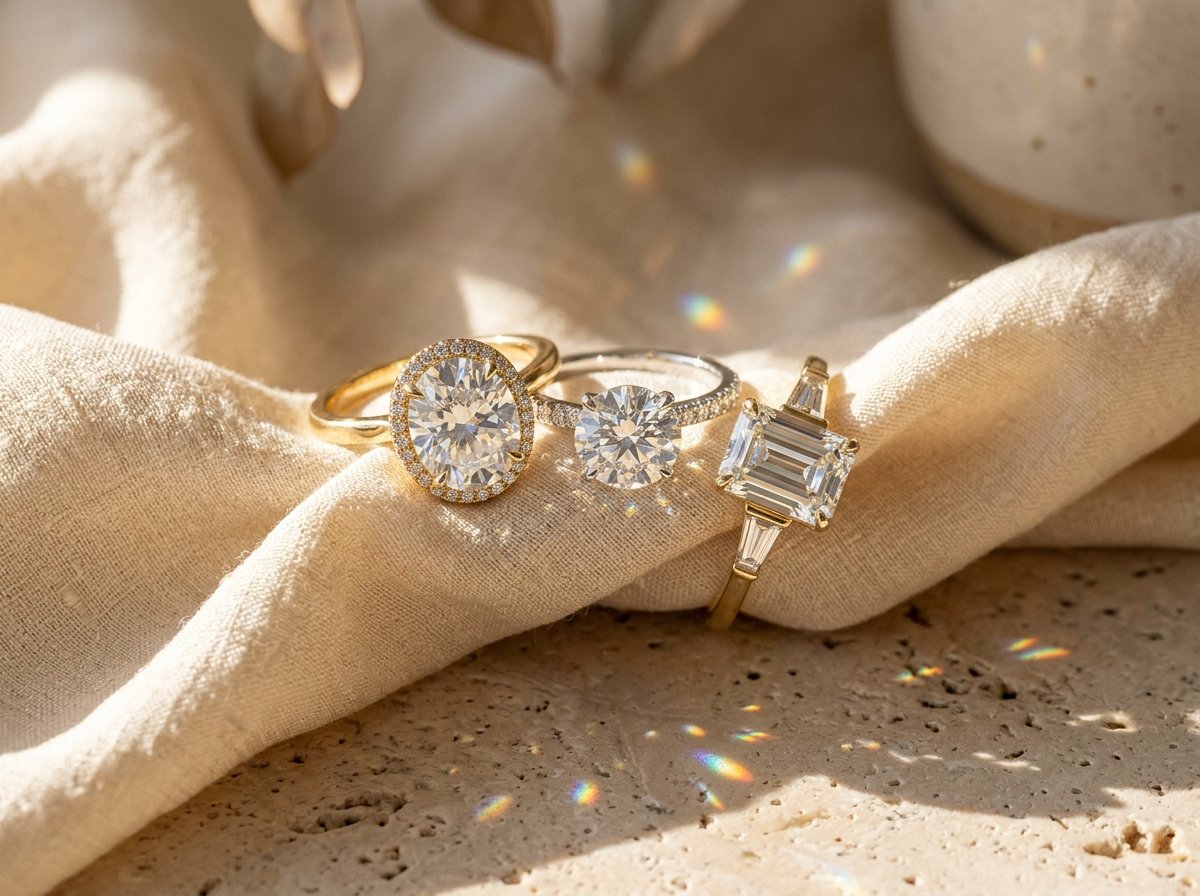
Selecting flattering 1.30–1.45 length-to-width silhouettes while engineering pavilion angles that prevent dark bow-tie bands.
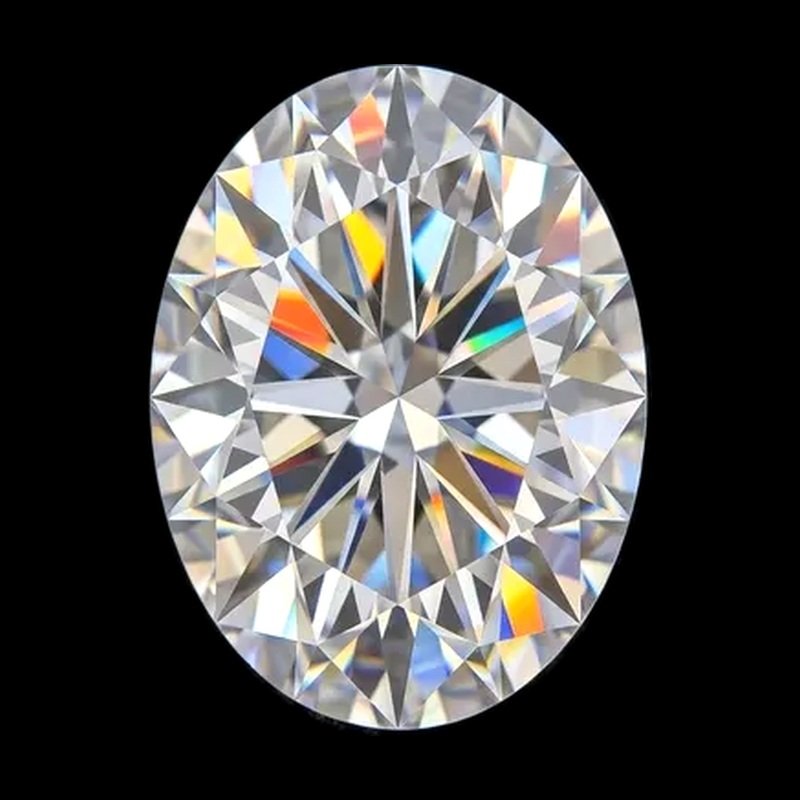
The Oval Cut dominates modern engagement styling thanks to graceful finger elongation and generous top-down spread. Because its elliptical profile spans farther longitudinally, a 1.00 ct DEW Oval (7.7 × 5.7 mm) reads visually larger than a 6.5 mm Round Brilliant.
Yet ovals remain among the trickiest cuts in 4H silicon carbide. Imprecise pavilion slope transitions across the waist and poles trigger two immediate flaws: a stubborn black bow-tie shadow or milky double-refraction haze inside crushed-ice facets.
Divide an oval's length by its width to obtain its L:W ratio (e.g., 8.5 mm ÷ 6.5 mm = 1.31). Even a 0.15 shift noticeably alters hand aesthetics:
While round brilliants maintain equal distance from culet to girdle, ovals force steeper pavilion slopes across the short waist and shallower angles toward the tips. Poorly calibrated slopes reflect observer head-shadow directly across the belly, creating a dark butterfly bow-tie. Gentle contrast gives facets definition; an unmoving black band signals flawed geometry.
Standard Brilliant Ovals use long, crisp kite mains that showcase 4H-SiC clarity and bold fire cleanly. By contrast, Crushed-Ice Ovals pack tiny offset micro-facets along the pavilion; because moissanite's +0.043 birefringence doubles each tiny facet edge, crushed-ice ovals frequently appear cloudy under overcast daylight. Hybrid Ovals refine tip facets cleanly without muddying central sharpness.
Inspect both left and right lobes for balanced curved shoulders without flat sides. Four claw prongs at 2, 4, 8, and 10 o'clock—or bold compass prongs—frame 1.50 ct (8.5 × 6.5 mm) and 2.00 ct (9.0 × 7.0 mm) ovals cleanly.
Calibrated oval dimensions comparing classic 1.35:1.00 sizing against compact and slender L:W options.
| DEW Rating | Classic 1.35 Profile | Compact (~1.25) | Slender (~1.45) | Recommended Mounting |
|---|---|---|---|---|
| 0.50 ct DEW | 6.0 × 4.0 mm | 5.8 × 4.6 mm | 6.3 × 4.3 mm | Petite solitaire or cluster accent |
| 1.00 ct DEW | 7.7 × 5.7 mm | 7.3 × 5.8 mm | 8.0 × 5.5 mm | 4-prong hidden halo or cathedral |
| 1.50 ct DEW | 8.5 × 6.5 mm | 8.2 × 6.5 mm | 8.9 × 6.1 mm | Claw-prong solitaire or pavé shank |
| 2.00 ct DEW | 9.0 × 7.0 mm | 8.8 × 7.0 mm | 9.5 × 6.5 mm | Cathedral basket with gallery rail |
| 3.00 ct DEW | 10.5 × 7.5 mm | 10.0 × 8.0 mm | 10.8 × 7.4 mm | 4- or 6-prong statement solitaire |
| 4.00 ct DEW | 11.5 × 8.5 mm | 11.0 × 8.8 mm | 12.0 × 8.2 mm | 6-prong gallery or sleek bezel frame |
Buyers often seek crushed-ice cuts hoping micro-facets mimic diamond texture while disguising belly shadows.
Moissanite's strong birefringence splits tiny crushed-ice reflections into blurry double images; Brilliant and tuned Hybrid cuts remain visibly crisper.
Low-cost factory ovals frequently cut thin bellies to inflate millimeter length—resulting in glaring black bow-ties and watery windowing where skin tone shows directly through the waist.
Watch out for sub-$50 / sub-200 PLN silver rings: The same caution applies to discount online boutiques and resellers offering sterling silver moissanite rings for less than $50 (or under 200 PLN in European markets)—almost invariably inexpensive Asian mass-market builds set with weaker warm-tinted or imprecise stones.
Every Oval moissanite mounted by Biżuteria Pola is individually screened for crisp brilliant clarity, Color D neutrality, and minimal bow-tie contrast.